

Four fence approaches consistently make small yards feel bigger and work harder: horizontal slat fencing, semi-private slatted panels, living or vertical garden fences, and slim metal picket paired with a trellis. A fifth worth considering is a short multifunctional fence with built-in seating or planters, which turns a boundary line into usable space instead of just a wall.
- Horizontal slat fence (cedar or composite boards, 4 to 6 feet tall): DIY-friendly if you’re comfortable with a circular saw and post-setting; otherwise a half-day job for a pro crew.
- Semi-private slatted panels (gapped boards or lattice-topped solid base): moderate DIY difficulty; getting even spacing looks better when a pro jigs the cuts.
- Living or vertical garden fence (trellis with vines, modular planting pockets): DIY for the planting, but the structural attachment points are worth having a professional check or install.
- Slim metal picket with trellis (aluminum or steel pickets, wood or wire trellis add-on): pickets are usually a pro install for a clean, code-compliant finish; the trellis itself is an easy DIY add-on afterward.
- Multifunctional fence with built-in seating or planters: almost always a pro build, since it involves load-bearing joinery most homeowners don’t have the tools or experience to get right.
Key Takeaways
Small yard fences work best when they prioritize visual openness, light, and multifunction use over pure height and solidity, since the fence is often the most visible surface in the space.
| Point | Details |
|---|---|
| Choose a visual strategy first | Horizontal slats widen a space; vertical elements and light colors raise and brighten it. |
| Match material to your priority | Aluminum gives the lightest visual weight; vinyl and composite give privacy with minimal upkeep. |
| Living fences take time | Vines and trellis panels need one to two seasons to provide real screening, so plan accordingly. |
| Confirm setbacks and permits early | Height limits and property-line setbacks vary by town and can force a redesign if skipped. |
| Call Advantage Fence for complex builds | Advantage Fence handles design, permitting, and installation for seating, planters, and vertical garden attachments. |
Table of Contents
- Why Small Yard Fence Ideas Matter More Than You Think
- Design Rules That Make a Small Yard Look Bigger
- Concrete Fence Ideas for Small Yards
- Comparing Fence Materials for Small Yards
- Living Fences and Vertical Gardens: What Actually Works
- Multifunctional Fences and Lighting That Extend Usable Space
- Budget-Friendly and DIY Fence Upgrades
- Costs, Timelines, and Permits for Small Yard Fences
- Your Quick Decision Checklist for a Small Yard Fence
- How a Contractor Actually Approaches a Small Yard Fence
- Getting Professional Help From Advantage Fence
- Frequently Asked Questions
- Sources
Why Small Yard Fence Ideas Matter More Than You Think
In a small yard, the fence isn’t a background detail. It’s the single largest visual surface most people see, and it shapes whether the whole space feels open or closed off. Prioritize how the fence affects perceived width, how much light gets through, and whether it can double as something useful, rather than defaulting to the tallest, most solid option available.
Before you fall in love with a design, run it against a short checklist:
- Privacy versus openness: do you need to block a direct sightline from a neighbor’s second floor, or just soften the edge of the yard?
- Light and airflow: a solid 6 foot privacy fence can turn a small yard into a shade trap, especially on the north or east side.
- Storage or multi-use potential: could the fence hide trash cans, hold tools, or double as a planter wall?
- Maintenance tolerance: are you willing to restrain a vine twice a year, or do you want to install it and forget it?
- HOA and permit constraints: many associations restrict height, material, and even color, on top of whatever your town requires.
Local zoning commonly caps height and requires a small setback from the property line. Many municipalities allow front-yard fences up to only 4 feet while permitting 6 foot fences along the back and side yards, and setback requirements as small as 1 to 6 inches from the property line are common. On a narrow lot, that inch count actually matters. There’s also the “finished side out” convention, meaning the smooth, finished face of the fence should point toward your neighbor, not toward you. It’s a small courtesy that avoids awkward conversations later, and some HOAs enforce it as a rule rather than a suggestion.
Design Rules That Make a Small Yard Look Bigger
Five visual principles do most of the heavy lifting when you’re trying to make a cramped yard read as spacious:
- Horizontal lines widen a space. Horizontal slat fencing tricks the eye into perceiving more width than actually exists, which is why it’s become the default recommendation for narrow urban lots and townhouse side yards.
- Vertical emphasis raises the eye. Tall, narrow elements like slim metal pickets or a vertical trellis draw attention upward, which makes a low-ceiling yard (one boxed in by a neighboring wall or a second-story deck) feel taller rather than tighter.
- Partial transparency avoids the boxed-in feeling. A solid 6 foot wall on all sides can feel like standing in a shipping container. Gapped boards, lattice tops, or slim pickets let sightlines pass through just enough to keep the yard from feeling sealed.
- Alternating gaps create rhythm. Repeating a pattern of wide board, narrow gap, wide board keeps a long fence run from feeling monotonous, and it costs nothing extra beyond planning the layout before you cut.
- Light colors bounce more light. A whitewashed or pale gray fence reflects far more ambient light back into the yard than a dark stained cedar tone, which matters a lot in a space that only gets a few hours of direct sun.
These rules suit different house styles. Horizontal slats read as clean and modern, a natural match for mid-century or contemporary homes. Lattice-topped solid fencing leans traditional and pairs well with colonial or craftsman houses. Every one of these choices is a trade-off: more transparency means less privacy, and lighter colors show dirt and mildew faster than darker stains.
Concrete Fence Ideas for Small Yards
Here are the specific styles worth putting on your shortlist, ranked roughly by how often they solve the small-yard problem well.
1. Horizontal Slat Fence
Wide cedar or composite boards run sideways instead of stacked vertically. Pro: visually widens the yard and looks contemporary. Con: requires precise, even spacing to look intentional rather than sloppy. Fits tiny footprints well since the horizontal line does the space-stretching work for you. Maintenance is standard for the material; wood needs restaining every 2 to 3 years.
2. Semi-Private Slatted Panels
Vertical or horizontal boards with consistent gaps between them, letting light and air through while blocking direct sightlines. Pro: balances privacy and openness better than almost any other single design. Con: doesn’t fully block a neighbor looking down from an elevated deck. Great for tiny yards where full walls feel oppressive. Low maintenance beyond occasional cleaning or restaining.
3. Lattice-Top Fence
A solid lower section, often 4 feet, topped with 2 feet of open lattice. This is a classic semi-privacy configuration, with solid base and open top letting light filter through above head height while keeping ground-level privacy intact. Pro: privacy where you need it, light where you don’t. Con: the lattice section needs periodic tightening if it’s wood. Fits small yards especially well along a single problem side rather than the whole perimeter.
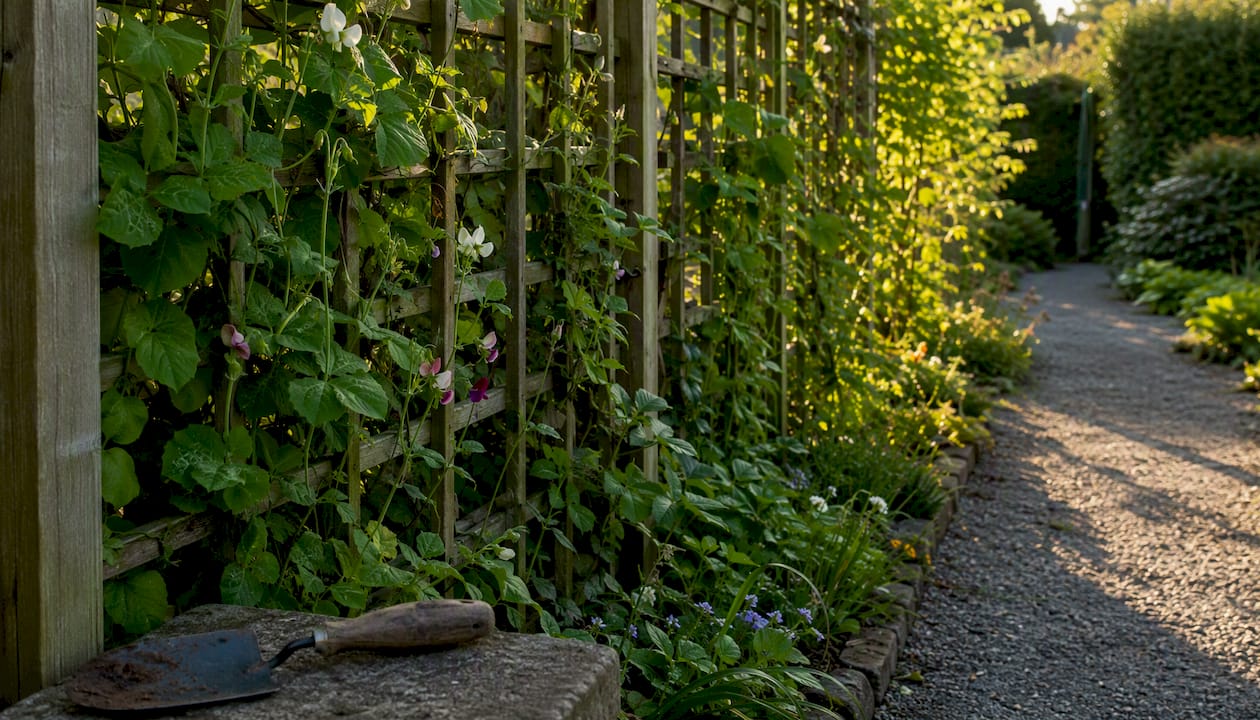
4. Vertical Garden or Trellis Fence
A structural trellis frame supports climbing plants instead of solid panels. Pro: softens the boundary and adds real greenery without eating ground space. Con: takes a full growing season or two before it provides real screening. Excellent for tiny footprints since the plants grow up, not out. Maintenance means pruning two to three times a year.
5. Living Hedge Integrated With a Low Fence
A short 2 to 3 foot fence paired with a dense evergreen hedge planted just behind it. Pro: combines structure with a natural look and doesn’t feel like a wall. Con: hedges need consistent watering and take years to fill in. Works best where you have at least 18 to 24 inches of planting bed depth.
6. Slim Metal Picket With Trellis Add-On
Narrow aluminum or steel pickets provide a low-visual-weight boundary, with a wood or wire trellis panel attached for vertical planting. Pro: the slimmest visual profile of any fencing option, so it barely registers as a “wall.” Con: offers almost no privacy on its own. Ideal for front yards or side yards where openness matters more than screening. Virtually maintenance-free aside from the trellis planting.
7. Bamboo or Reed Roll Upgrade
Rolled bamboo or reed panels attached over an existing chain-link or wood frame. Pro: cheap, fast, and adds texture instantly. Con: breaks down faster than solid wood, typically needing replacement every 3 to 5 years. A strong option for compact yards on a tight budget. Easy weekend DIY project.
8. Pallet or Upcycled Panel Fence
Reclaimed wood pallets, sanded and sealed, built into simple panel sections. Pro: the lowest-cost option on this list, often close to free if you source pallets locally. Con: inconsistent board quality means more prep work than buying new lumber. Best for a garden accent section rather than a full perimeter. DIY-friendly, though structurally weaker than milled lumber over time.
9. Gabion Planter Accents
Wire cages filled with stone, used as short accent walls rather than a full fence line. Pro: adds texture and structure without a heavy visual fence line, and pairs well with runs under 500 square feet as a visual anchor rather than a solid barrier. Con: heavy and not cheap once you account for stone fill. Best hired to a pro for anything beyond a low garden edge.
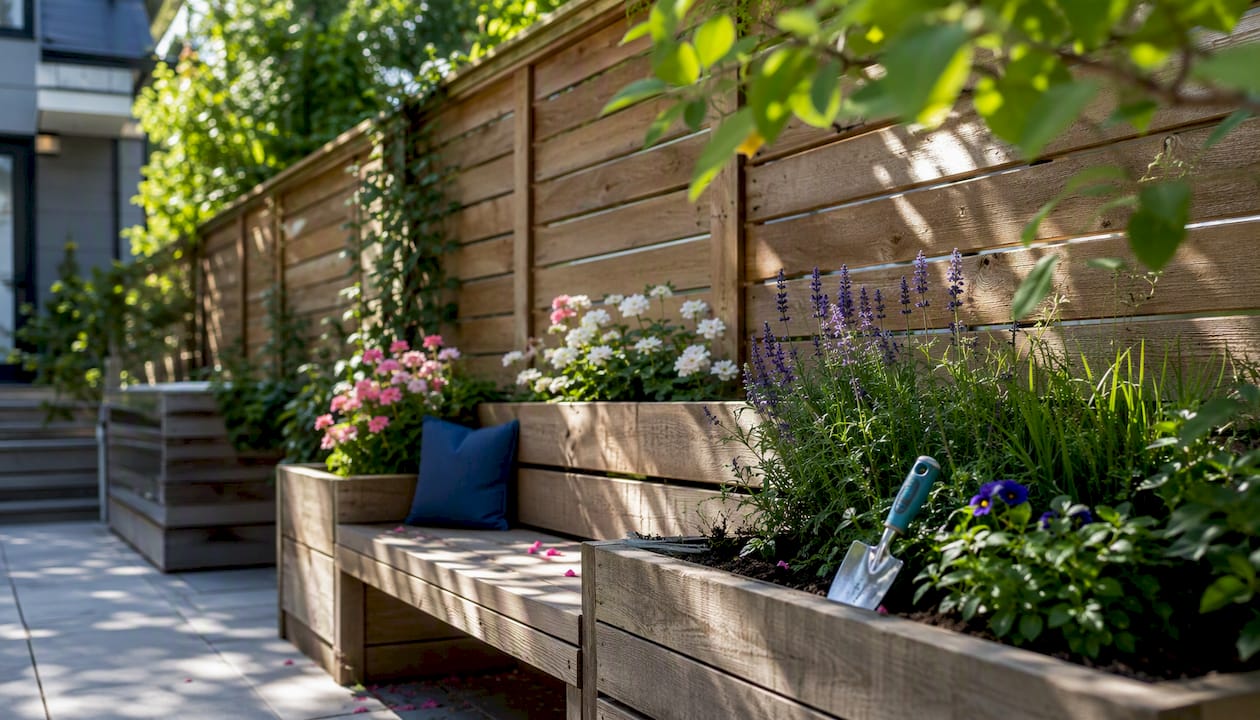
10. Short Fence With Built-In Planters or Seating
A 3 to 4 foot fence section incorporating a bench seat or planter box along the top or base. Pro: turns dead perimeter space into functional seating or garden bed. Con: more complex build, meaning higher cost and usually a pro job. Fits small yards perfectly since it eliminates the need for separate furniture.
Ideas 1, 2, 7, and 8 are the most approachable DIY projects for a homeowner with basic tools. Ideas 6, 9, and 10 tend to go smoother with a professional crew, particularly where structural attachments or code compliance come into play.
Comparing Fence Materials for Small Yards
If you want the lightest visual weight, aluminum or slim metal picket wins outright. If you want maximum privacy from the smallest footprint, a solid vinyl or composite panel does the job with almost no maintenance overhead.
Vinyl carries a higher upfront price but demands almost no upkeep, while wood costs less to install but needs regular staining to hold its look. Aluminum trades away privacy for a slim, unobtrusive profile that barely registers visually, which is exactly why it pairs so well with a trellis add-on for vertical planting.
- Spot-stain wood fencing where the sun hits hardest first, usually the south-facing panels, instead of waiting to redo the whole run at once.
- Check trellis attachment hardware annually, since loose screws under plant weight are the most common living-fence failure point.
- Wash vinyl panels with a hose and mild soap once or twice a year to prevent green mildew streaking in shaded corners.
Pro Tip: If your HOA restricts fence materials, ask about approved alternatives before you fall in love with a design. Some associations that ban solid wood privacy fences will approve the same height in vinyl or composite because it meets a different aesthetic standard on their books.
Living Fences and Vertical Gardens: What Actually Works
Living fences and vertical planting rank among the top choices for small yards because they add real green screening without stealing ground space you’d otherwise use for a patio or play area. A trellis or planted panel grows upward, not outward. This is the entire appeal in a yard where every square foot is already spoken for.
Plant selection depends heavily on light exposure. In shaded yards, look at climbing hydrangea or Boston ivy, both of which tolerate low sun and still fill in a trellis within two seasons. In full sun, fast-growing options like clematis or trumpet vine cover ground quickly, though trumpet vine spreads aggressively and needs yearly containment. For year-round screening, evergreen options like star jasmine or certain bamboo varieties hold their leaves through winter, which matters if privacy is a year-round concern rather than a summer-only one.
University extension guidance on trellis construction stresses that structural load matters as much as plant choice. A fence built to hold a light lattice panel isn’t automatically strong enough to support a mature vine loaded with wet leaves after a storm, plus soil-filled planter boxes if you’re running a modular pocket system. Before attaching anything heavier than a basic trellis, confirm the posts and framing can handle the added weight, particularly with saturated soil after rain.
Pro Tip: If you’re running modular planting pockets along a fence line, plan the irrigation before you plant, not after. A simple drip line clipped to the top rail is far easier to install on an empty fence than one you have to thread through a wall of established greenery.
Maintenance follows a seasonal rhythm: prune vines back hard in late winter before new growth starts, fertilize lightly in spring, and check for winter dieback on evergreen varieties once temperatures drop. Skipping the late-winter prune is the single most common reason living fences turn into a tangled mess by midsummer.
Multifunctional Fences and Lighting That Extend Usable Space
Adding built-in seating, shallow storage, planters, or mounted lighting turns a plain perimeter into living space you can actually use, which matters enormously when your yard doesn’t have room to spare for a separate bench or shed.
- A built-in bench along a fence run typically needs 15 to 18 inches of seat depth to feel comfortable, not just decorative.
- Shallow storage boxes built into a fence base work well for garden tools, but leave at least 3 inches of hinge clearance so the lid doesn’t bind against the fence frame.
- Planter boxes attached to a fence should stay under roughly 12 inches of soil depth unless the fence was specifically engineered for that load.
- Combining a seating zone with fencing works just as well in a backyard as it does on a commercial patio, giving you a defined lounge area without adding freestanding furniture that eats floor space.
Lighting does more for a small yard after dark than almost any other single upgrade — soft washes of light can be combined beautifully with water features to create a relaxing, multifunctional outdoor space. Solar cap lights on post tops are the easiest DIY option, needing zero wiring. LED strip lighting tucked under the top rail creates a soft wash of light along the whole fence line, and low uplighting aimed at a vertical garden turns plain foliage into a nighttime feature. Anything beyond low-voltage solar or plug-in strip lighting, especially hardwired fixtures, is worth having an electrician handle. Outdoor wiring mistakes are a real fire and shock hazard, and it’s not a place to improvise.
Budget-Friendly and DIY Fence Upgrades
You don’t need a full fence replacement to change how a small yard feels. Some of the fastest wins come from upgrading what’s already there.
- Add privacy slats to existing chain-link. Slide-in vinyl or bamboo slats convert a bare chain-link fence into a semi-private screen in an afternoon, with no permit needed since you’re not altering the structure itself.
- Install reed or bamboo roll panels. Zip-tie or wire rolled panels to any existing fence frame for instant texture and partial screening, a project that most homeowners finish in under two hours.
- Hang outdoor fabric screens or shade sail panels. These work as a seasonal privacy fix, especially useful while a living fence is still filling in.
- Paint or restain an existing fence. A fresh coat in a lighter shade can visually transform a tired yard for the cost of paint and a weekend.
- Attach planter boxes to fence rails. Adds greenery and softens hard lines without any structural changes to the fence itself.
None of these five typically require a permit, since you’re modifying an existing structure rather than building a new one. That changes the moment you’re adding height, extending the fence line, or building anything load-bearing like a seating platform.
For rough cost comparison: a DIY chain-link slat upgrade runs somewhere in the range of $1 to $3 per linear foot in materials, while a full professional fence replacement for a small yard typically lands much higher once labor, permits, and site prep are factored in. If your existing fence is structurally sound and you just want more privacy or style, an upgrade almost always makes more financial sense than tearing it out. Once the posts are rotting or leaning, though, you’re better off putting that upgrade money toward a full, properly installed replacement.
Costs, Timelines, and Permits for Small Yard Fences
Most small-yard fence projects run from a modest DIY chain-link upgrade all the way up to a fully custom vinyl or composite installation, with material choice driving most of the cost swing. Aluminum fencing budgets typically fall in a moderate per-linear-foot range for materials and installation combined, making it a reasonable middle option for homeowners who want a finished, code-compliant look without wood’s maintenance demands.
Timeline expectations for a professional install:
| Stage | Typical duration |
|---|---|
| Design consultation and quote | 1 to 3 days |
| Permit application and approval | 1 to 3 weeks, depending on your municipality |
| Material ordering and lead time | 1 to 4 weeks |
| On-site installation | 1 to 3 days for a typical small yard |
Permit requirements vary by town, but a working checklist looks like this:
- Site plan or property survey showing exact fence placement relative to property lines.
- Height compliance confirmed against local front, side, and rear yard maximums.
- Utility clearance to avoid buried lines, especially if you’re adding footings for a heavier gabion or seating feature.
- HOA approval, where applicable, often requiring material and color sign-off before you ever pull a town permit.
A quick tip that actually speeds things up: call your town’s zoning office before you finalize a design, not after. Confirming height and setback rules on the front end avoids the far more expensive problem of redesigning, or worse, tearing out, a fence that doesn’t meet code.
As for when to bring in a professional rather than handling it yourself: site complexity is the deciding factor. A straight run of basic fencing on flat ground is a reasonable DIY project for a handy homeowner. Anything involving load-bearing seating, engineered planter attachments, sloped or rocky ground, or electrical lighting is worth handing to a licensed contractor. The cost difference between doing it right the first time and fixing a failed DIY structural feature later is rarely close.
Your Quick Decision Checklist for a Small Yard Fence
Run through these steps in order, and you’ll go from idea to installed fence without backtracking:
- Measure your yard and the specific fence run (30 to 60 minutes). Note exact linear footage and any slope changes.
- Walk the yard and note sightlines you actually want blocked versus areas where openness is fine.
- Check setback and height rules with your town and HOA if you have one (1 to 2 weeks for a response in most cases).
- Pick your material based on the maintenance and privacy trade-offs covered above.
- Decide DIY versus pro honestly, based on the complexity of what you’re building, not just the price tag.
- Schedule a site visit or place your material order, depending on your DIY versus pro decision (professional estimates typically take 1 to 5 days to schedule and deliver).
If you’re calling in a contractor for an estimate, have a few things ready ahead of time: rough yard dimensions, photos of the current fence or boundary, any HOA design guidelines in writing, and a general sense of your budget range. That prep alone can cut a full round of back-and-forth off the quoting process.
How a Contractor Actually Approaches a Small Yard Fence
Professionals start a small-yard project the same way every time: verify setbacks, confirm which side needs the finished face, check ground conditions, and only then start sketching layout options that avoid wasting inches you don’t have to spare.
That verification step catches problems homeowners often miss. A property line survey from ten years ago doesn’t account for a shed addition or a neighbor’s re-fence that shifted the assumed boundary. Ground conditions matter just as much: a spot that looks fine on the surface might sit over poor drainage, which becomes a real problem the first time a post footing heaves after a hard freeze.
Reclaiming corner space is one of the more overlooked value-adds a pro brings to a tight yard. A slightly angled corner post, or a rounded transition instead of a sharp 90 degree joint, can open up an extra foot or two of usable ground exactly where a small patio table or storage bin needs to sit. It looks like a small design choice. In a 400 square foot yard, it’s the difference between fitting a bistro set and not.
Drainage and anchoring go hand in hand with anything load-bearing. Planter boxes and seating sections need footings sized for the actual weight they’ll carry, wet soil included, not just the fence panel’s own weight. A contractor also handles the permit paperwork, proposes attachment methods engineered for vertical gardens rather than improvised hardware, and stands behind the work with a warranty, plus site cleanup once the last post is set. That combination of code knowledge and structural judgment is exactly where a professional earns the fee a DIY project doesn’t have to pay, but also doesn’t get.
Getting Professional Help From Advantage Fence
Advantage Fence designs and installs small-yard fences built around the same three priorities covered throughout this guide: privacy where you need it, light where you don’t, and multifunction use wherever the layout allows it.
Every project starts with a design consultation that accounts for your yard’s actual sightlines and constraints, not a generic template. From there, the team handles permitting assistance so you’re not the one deciphering your town’s zoning code, and installs your choice of wood, vinyl, aluminum, composite, or chain-link fencing suited to your specific site. For homeowners wanting a living fence or built-in seating, Advantage Fence engineers the attachment points to handle real plant and structural loads, avoiding the drainage and stability mistakes that turn a good design into a callback.
Advantage Fence serves homeowners across Gloucester County, Camden County, Burlington County, and Atlantic County. If you’ve settled on one or two ideas from this guide, request a free estimate or schedule a site visit to see how they’d fit your specific yard.
Frequently Asked Questions
What is the best fence for a small backyard?
For most small backyards, semi-private slatted panels or a lattice-topped fence strike the best balance, since they screen direct sightlines while still letting light through. If privacy is the top priority and you’re not worried about the yard feeling boxed in, a solid vinyl or composite panel fence is the lowest-maintenance option.
How do I make my small yard feel bigger with a fence?
Use horizontal boards to widen the visual space, keep the fence height as low as your privacy needs allow, and choose a light color to bounce more light back into the yard. Partial transparency, through gapped slats or a lattice top, also helps avoid the boxed-in feeling that solid tall fencing creates.
Can I combine a privacy fence with plants in a small yard?
Yes, and it’s one of the most effective small-yard strategies available. A trellis or modular planting system attached to a slatted or picket fence adds greenery and softens hard lines without taking up ground space you’d otherwise lose to a wider planting bed.
Do I need a permit for a small yard fence?
Most towns require a permit for new fence construction, especially anything affecting height or property-line placement, though simple upgrades to an existing fence, like adding privacy slats, usually don’t need one. Check with your local zoning office and your HOA, if you have one, before finalizing a design.
What’s the cheapest way to add privacy to a small yard fence?
Privacy slats for chain-link, reed or bamboo roll panels, and outdoor fabric screens are the fastest and least expensive upgrades, and most homeowners can install any of them in an afternoon without hiring a contractor.
Sources
- Small Yard Fencing Ideas for Townhouses & Urban Lots | FenceCalc
- Edis
- The Best Privacy Fence: Materials, Cost & Ideas
- 17 Garden Fencing Ideas for Small Backyard Owners
- Best Fencing Materials: Vinyl vs Wood vs Aluminum – GreenWay Fence & Railing Supply