

Horizontal slats, architectural metal panels, mixed-material walls, cable rail, and wood-look composite are the five modern fence styles homeowners choose most often right now. Each one solves a different problem, so the right pick depends on what you actually need the fence to do.
Quick picks by priority:
- Privacy: horizontal slats (wood or aluminum) with tight spacing
- Curb appeal on a budget: mixed-material accents on an existing frame
- Pool code compliance: aluminum panels rated for self-closing gates
- Lowest maintenance: aluminum or composite over painted wood
- Tight budget: cable rail or partial-height metal panels
Design lists tracking 2026 fence trends consistently name horizontal aluminum, black architectural framing, and wood-look composite as the styles homeowners are actually installing, not just pinning to a mood board. A quality installation from a company like Advantage Fence typically recovers 50 to 70 percent of its cost at resale, according to Opendoor’s analysis of fencing and home value, which is a good number to keep in mind before you fall in love with the most expensive option on Pinterest.
Key Takeaways
The right modern fence style comes down to matching material and design to your climate, budget, and neighborhood norms, not just picking the most striking option online.
| Point | Details |
|---|---|
| Start with function, not looks | Define privacy, security, or pool-code needs before choosing a style. |
| Match the neighborhood | Fences that fit the block’s dominant material and height perform better at resale. |
| Budget for the unknowns | Add 10 to 15 percent to any estimate for permits, grading, or utility surprises. |
| Check posts before replacing | Sound posts often support a modern overlay instead of a full teardown. |
| Hire Advantage Fence for complex jobs | Advantage Fence handles design, permitting, material selection, and installation for pool enclosures, HOA-approved projects, and mixed-material walls. |
Table of Contents
- Which Modern Fence Styles Should You Consider?
- Which Material Actually Fits Your Climate and Budget?
- How Do You Choose the Right Style for Your Property?
- What Will a Modern Fence Cost and Return at Resale?
- How Long Will Your Fence Last With Normal Care?
- Can You Modernize an Old Fence Without Replacing It?
- When Should You Hire a Professional Installer?
- What Finishes and Colors Look Modern Right Now?
- What Should You Photograph Before Calling an Installer?
- Does Climate Actually Change Which Fence You Should Buy?
- Modern Fence Styles: Ideas Homeowners Can Build and Buy
- Get a Modern Fence Built Right the First Time
- Frequently Asked Questions
- Sources
Which Modern Fence Styles Should You Consider?
Modern fencing generally means clean lines, minimal visual clutter, and materials that don’t scream for attention. That covers a wider range than most people expect.
Horizontal slat fencing is the style most associated with “modern” right now, in wood or aluminum. Wide flat boards run sideways instead of the traditional vertical pickets, creating a low, linear look that reads contemporary even on a modest ranch home. It’s the top choice for backyard privacy and works well as a front-yard accent when kept low. The tradeoff: tight spacing blocks airflow and can trap heat against wood; too much gap sacrifices privacy.
Minimalist vertical slats keep the traditional orientation but strip away ornamentation, using thin, evenly spaced boards with a clean cap rail. It suits homes with a more traditional roofline that still want a modern edge without a jarring contrast.
Mixed-material fencing pairs stone or concrete pillars with metal or wood infill panels. This is the style that photographs best for curb appeal because it echoes materials already on the house, like a stone-veneer foundation or a metal roof.
Full architectural metal panels, often powder-coated black, deliver a sharp, almost industrial look. They’re durable, low-maintenance, and increasingly common on new-construction homes.
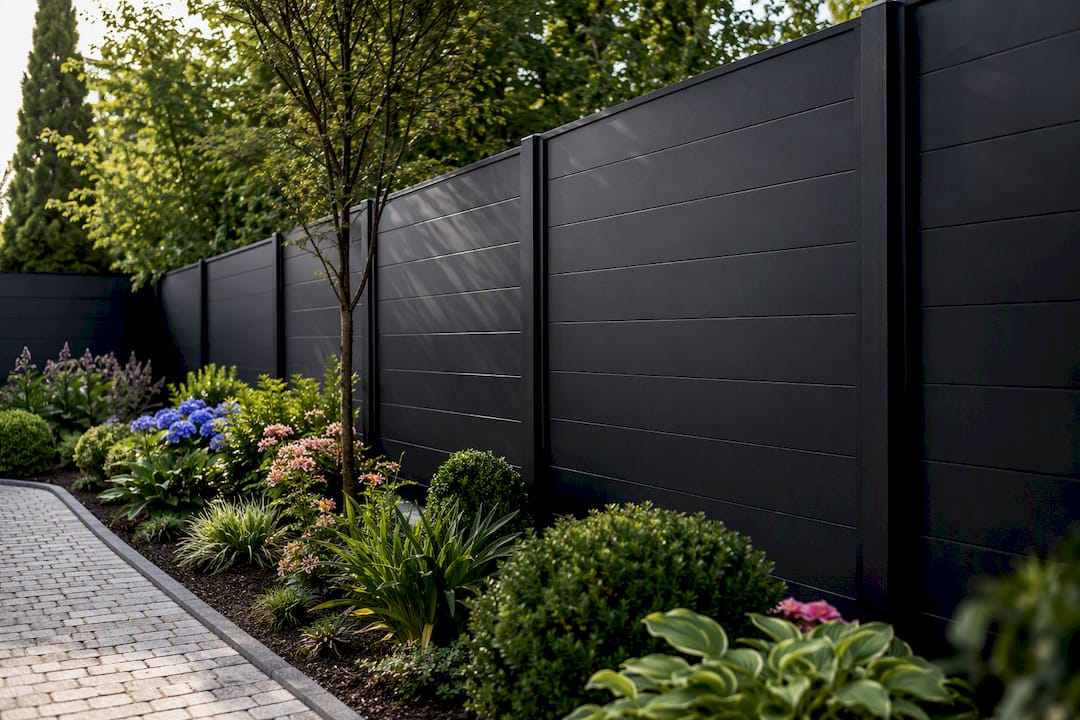
Cable-rail systems use horizontal steel cables strung between posts instead of solid infill. They preserve views, which makes them popular for hillside or waterfront lots, but they offer close to zero privacy.
Glass panel fencing shows up most around modern pool areas, where code requires a barrier but homeowners don’t want to block the view of the water.
Wood-look composite mimics the look of cedar slats without the upkeep, and it’s gaining ground fast as buyers favor low-maintenance materials, per Principia Consulting’s 2026 fencing market outlook.
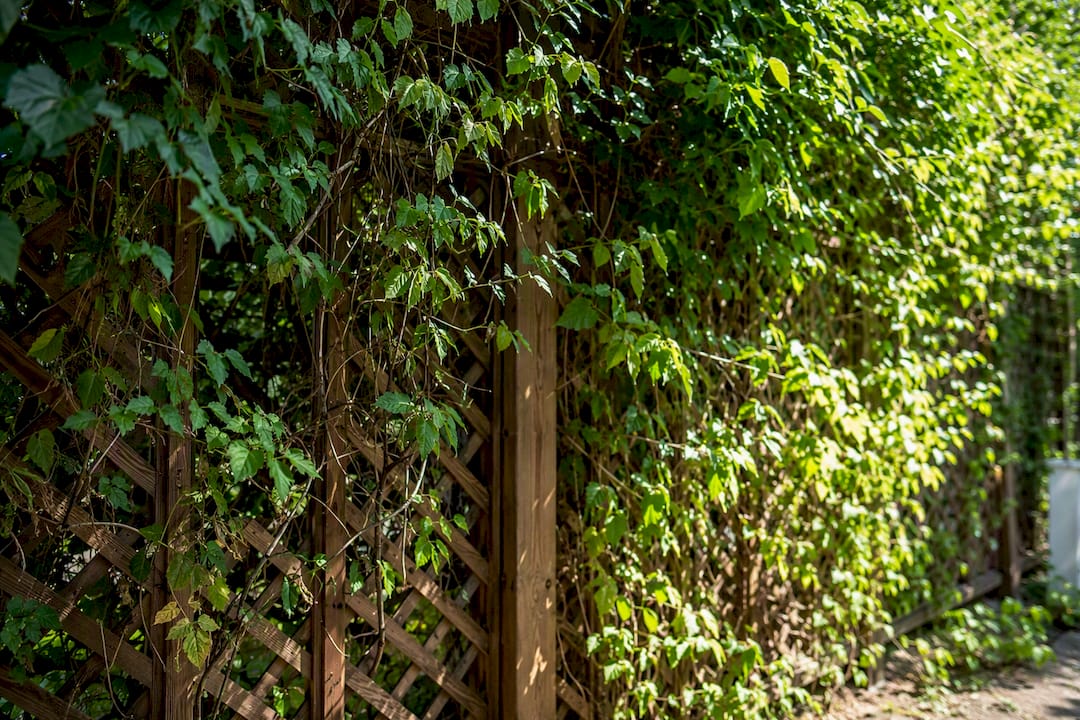
Living green screens use trellis panels with climbing vines or hedge rows as a softer, semi-natural privacy barrier, often combined with a structural fence behind it.
For your inspiration folder, Architectural Digest’s privacy fence roundup is worth screenshotting from directly. Save close-ups of slat spacing, post caps, and gate hardware, not just the wide establishing shot.
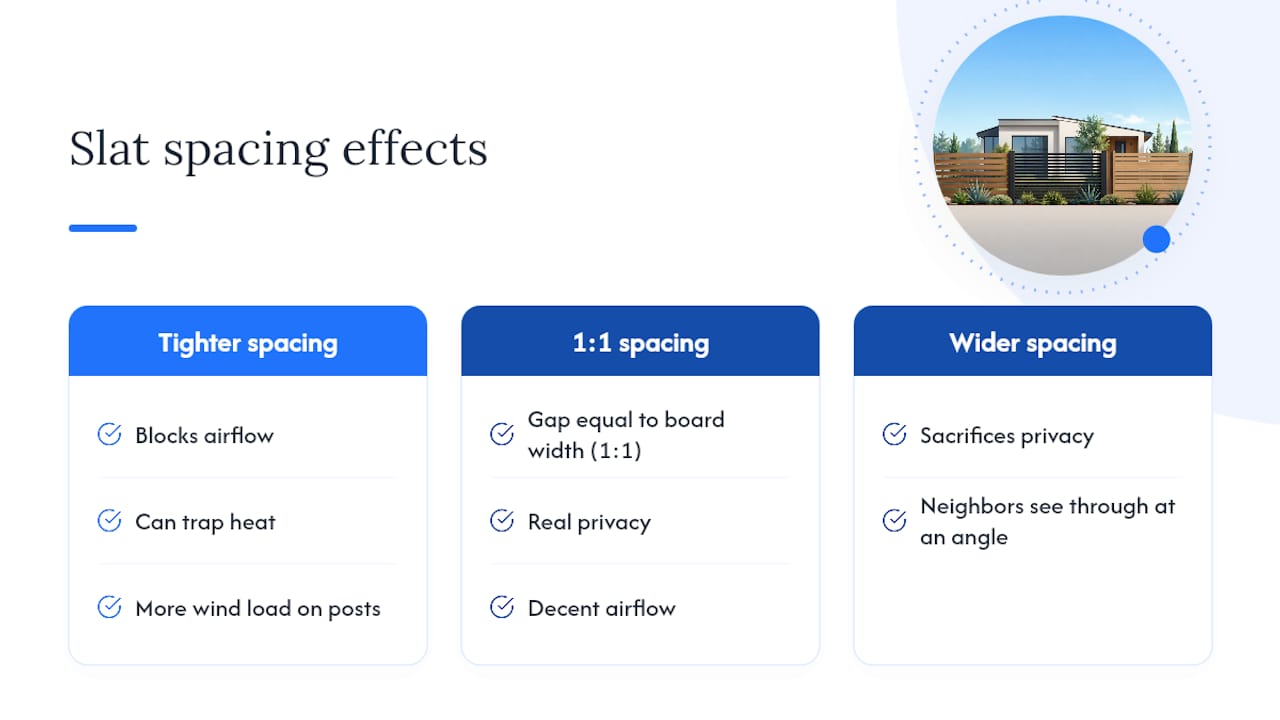
Pro Tip: Slat spacing is the detail most homeowners get wrong. A gap equal to the board width (roughly a 1:1 ratio) gives you real privacy with decent airflow. Go tighter and you lose ventilation and put more wind load on your posts; go wider and neighbors can see straight through at an angle.
Which Material Actually Fits Your Climate and Budget?
Material choice drives everything else, including how “modern” your fence still looks in five years.
| Material | Installed Cost (per linear foot) | Expected Lifespan | Maintenance | Best For |
|---|---|---|---|---|
| Chain-link | $10–$20 | 15–20 years | Minimal | Budget, rural, functional |
| Pressure-treated wood | $15–$30 | 10–15 years | Stain/seal every 2–3 years | Traditional privacy |
| Cedar/redwood | $25–$60 | 15–20 years | Stain every 2–3 years | Horizontal slat, curb appeal |
| Vinyl | $25 | 20–30 years | Occasional wash | Low-maintenance privacy |
| Aluminum | $30–$50 | 25+ years | Minimal | Pool enclosures, modern panels |
| Composite | $55 | 25–30 years | Minimal | Wood-look, low-maintenance |
| Ornamental steel/mixed-material | $50–$110 | 25+ years | Rust touch-up as needed | Architectural, mixed-material walls |
A few things that table won’t tell you on its own:
- Aluminum is the go-to for pool fencing because most local codes require self-latching gates and non-climbable rail spacing, which aluminum systems are built to meet.
- Coastal properties should watch for rust bleed on steel, even powder-coated steel, near salt air; stainless hardware is worth the upcharge.
- Vinyl holds its color reasonably well but can chalk or yellow after 10 to 15 years of direct sun exposure.
Freedonia’s market research pegs privacy fencing at roughly 42 percent of total residential fencing market value, with metal ornamental and composite materials steadily taking share from traditional wood. That shift shows up in showroom traffic too: more homeowners are asking about aluminum and composite than they were even three years ago.
How Do You Choose the Right Style for Your Property?
Work through this in order, not the other way around:
- Define the goal — privacy, security, pool code, or pure curb appeal changes everything downstream.
- Check HOA and neighborhood norms — a fence that clashes with the block can actually underperform a matching mid-range fence at resale, according to Redfin’s fence value guide.
- Pick the material family based on climate and maintenance tolerance.
- Set a real budget, including permits and site prep.
- Finalize style and gate details last, once the practical decisions are locked.
Before signing with any installer, ask who handles the permit, whether they’ll pull a property survey for fence placement, how deep the posts get set, and what the warranty actually covers in writing.
Red flags worth walking away from:
- No mention of permits or a survey
- Vague answers about post depth or footing
- Pricing that undercuts every other quote by a wide margin
What Will a Modern Fence Cost and Return at Resale?
| Material | Installed Cost (per linear foot) |
|---|---|
| Chain-link | $10–$20 |
| Pressure-treated pine | $15–$30 |
| Cedar/redwood | $25–$60 |
| Vinyl | $25 |
| Aluminum | $30–$50 |
| Ornamental steel | $50–$110 |
| Composite | $55 |
Three quick scenarios to size your budget against:
- Small yard accent (30 linear feet, mixed-material or decorative front section): roughly $1,500–$4,500
- Full 6-foot privacy perimeter (150 linear feet, cedar horizontal slat or vinyl): roughly $4,000–$9,000
- Decorative front-yard fence (60 linear feet, aluminum or ornamental steel): roughly $2,500–$6,500
On resale, quality fencing that fits neighborhood norms typically recovers 50 to 70 percent of installed cost. Formal appraisals tend to be more conservative, crediting closer to 30 to 40 percent, since buyer sentiment and appraised value often diverge on lifestyle features like privacy and pet safety.
Pro Tip: Add 10 to 15 percent to any fence budget for unknowns like unexpected grading, rock in the post holes, or a utility locate that shifts your line. Contractors see this on nearly every project; it’s not a sign something went wrong.
How Long Will Your Fence Last With Normal Care?
Most fences fail slowly, one component at a time, which is why a simple maintenance rhythm matters more than a big renovation later.
- Annually: inspect posts for lean, check gate hardware, clear vegetation buildup at the base.
- Every 2–3 years: restain or reseal wood, touch up any rust spots on steel.
- Every 5–10 years: replace worn hardware, check for wood rot at ground contact points, evaluate vinyl for UV chalking.
Wood warps and rots at the base first. Vinyl chalks and fades under heavy sun. Steel rusts wherever the coating chips. The fix for all three is usually localized, not a full teardown.
The decision rule contractors use: repair if the posts are structurally sound; replace once more than 20 to 25 percent of panels or posts have failed.
Can You Modernize an Old Fence Without Replacing It?
If your posts are solid, you likely don’t need a full replacement. Opendoor’s fencing guidance points to post soundness as the deciding factor: sound posts support an overlay, compromised posts don’t.
- Clean and repair loose boards
- Apply a uniform stain or paint across the whole run
- Add horizontal slat overlays over an old picket frame
- Swap in modern black hardware and hinges
- Add planting or a trellis screen to soften bare sections
Low budget: paint plus new hardware. Moderate: slat overlays and a new cap rail. Premium: composite cladding with integrated planter boxes.
It’s a false economy if posts are rotted or the yard has serious drainage problems, at that point, replacement is the better long-term move, even though it costs more up front.
When Should You Hire a Professional Installer?
Some projects are DIY-friendly. Others are not, and getting it wrong is expensive to fix twice.
Call a pro for pool enclosures, anything requiring HOA or permit approval, sloped or graded lots, large or automated gates, and mixed-material structural walls that need real footings.
Before hiring, check for:
- Active license and liability insurance
- Local references you can actually call
- A written scope of work, not a verbal estimate
- A clear change-order process for surprises
Advantage Fence handles design support, permitting, material selection across wood, vinyl, aluminum, and composite, and full installation, which covers the range of projects above without you juggling separate vendors.
Pro Tip: Ask any installer to show you a completed project within a mile or two of your address. Seeing how a material actually weathers in your specific climate tells you more than any brochure photo.
What Finishes and Colors Look Modern Right Now?
Matte black is the dominant finish for architectural metal fencing, and it’s not close. Wood-tone composites, two-tone panel combinations, and hardware designed to stay nearly invisible round out the current look.
Do: lean toward matte blacks, warm grays, and natural wood tones. Don’t: pair a high-gloss white vinyl fence into a block full of stained cedar, it reads dated the moment it goes up.
In hot, sunny climates, lighter tones reflect heat and resist visible fading better than deep black finishes. Coastal properties should ask specifically about salt-rated coatings on any metal component.
What Should You Photograph Before Calling an Installer?
Capture the full yard, not just the fence line, so a contractor can see the house and lot together. Add close-ups of slat spacing and post detail, gate hardware shots, and any color or material swatches you like.
Give your installer specific notes: target height, slat spacing in inches, preferred material family, and desired privacy level. Keep it organized in one digital folder with a short priorities list: look, budget, maintenance.
Does Climate Actually Change Which Fence You Should Buy?
Yes, more than most homeowners plan for before they buy. Wood expands and contracts with humidity swings, which is why boards installed tightly in spring can buckle by late summer in humid regions. In freeze-thaw climates, moisture that gets into end grain or fastener holes can crack boards over a few winters if the wood wasn’t properly sealed first.
Vinyl behaves differently. It handles moisture fine but gets brittle in extreme cold, so a hard impact in January can crack a panel that would just flex in July. Heavy UV exposure in southern and desert climates accelerates chalking and color fade faster than vinyl manufacturers’ standard estimates assume.
Metal’s main enemy is coastal salt air, not temperature. Powder-coated aluminum resists corrosion well, but steel components, even coated ones, need a genuine marine-grade finish near the coast or rust will find the smallest gap in the coating within a few seasons.
Composite performs the most consistently across climates, which explains a chunk of its growing market share, but it still expands and contracts with heat, so installers need to leave the manufacturer’s specified gap at seams. None of this means one material is universally “best.” It means the right material depends on your specific weather pattern, not just your design taste, and it’s worth naming your climate concerns out loud during the estimate.
Modern Fence Styles: Ideas Homeowners Can Build and Buy
The conventional advice treats fence shopping like picking paint chips: browse pictures, find one you like, call for a quote. That’s backwards. The research on resale value keeps pointing to the same uncomfortable truth: the fence that matches your block usually outperforms the fence that impresses you personally. That’s not the advice anyone wants walking into a showroom.
What gets underestimated is post condition. Homeowners fixate on slat style and finish color, while the actual lifespan of a fence, modern or otherwise, comes down to whether the posts were set right in the first place. A gorgeous horizontal-slat design on rotted or shallow posts is a two-year fence dressed up as a twenty-year one.
Prioritize in this order: climate-appropriate material first, neighborhood fit second, style details last. Get the first two right and almost any modern style you layer on top will actually hold up. Get them wrong and no amount of matte black powder coat will save you.
Get a Modern Fence Built Right the First Time
Every style covered here, horizontal slats, architectural metal, mixed-material walls, comes down to execution: correct post depth, the right material for your climate, and permitting handled before the first hole gets dug. Advantage Fence is the option for homeowners in Gloucester, Camden, Burlington, and Atlantic Counties who want that handled by one team instead of coordinating a designer, a permit runner, and an installer separately.
Advantage Fence offers design support, material selection across wood, vinyl, and aluminum, permitting assistance, and full installation for homeowners who’d rather get a fence built once, correctly, than manage change orders on a rushed job. If you’ve got a style in mind from the gallery above, or a fence that needs modernizing rather than replacing, the services page is the place to start a quote and get a real per-linear-foot number for your property.
Frequently Asked Questions
What is the most popular modern fence style right now?
Horizontal slat fencing, in either wood or aluminum, is the style showing up most often in current design trends and homeowner installations, largely because it reads as contemporary on almost any home style.
How much does a modern privacy fence cost per linear foot?
Installed costs generally run $25 to $60 for cedar or vinyl, and $30 to $110 for aluminum or ornamental steel, depending on panel style and finish.
Do modern fences add resale value?
Yes, when they match neighborhood norms. Quality fencing typically recovers 50 to 70 percent of installed cost at resale, though formal appraisals often credit less than buyers are actually willing to pay for.
Can I make my existing fence look modern without replacing it?
Often, yes, as long as the posts are structurally sound. Cleaning, restaining, adding slat overlays, and swapping in black hardware can modernize a fence for a fraction of replacement cost.
When do I need a permit for a privacy fence?
Most municipalities require a permit for fences above a certain height, commonly 6 feet, and HOA-governed communities frequently have separate design approval requirements. Check with your local building department before ordering materials.
Sources
- What type of fence adds to property value? | Opendoor
- Does a fence add value? | Redfin
- US residential fencing market study | Freedonia Group
- Residential fencing forecast and market drivers for remainder of 2026 | Principia Consulting